
Attractions · 25.10.2026 · 5 min read
Transfagarasan: a complete guide to the most spectacular road
Everything you need to know about the Transfagarasan: the history of the road built between 1970 and 1974, when it opens, what you see along the way from Vidraru and Poenari to Balea Lake, the bears by the roadside and how to get there from Dracula Land.
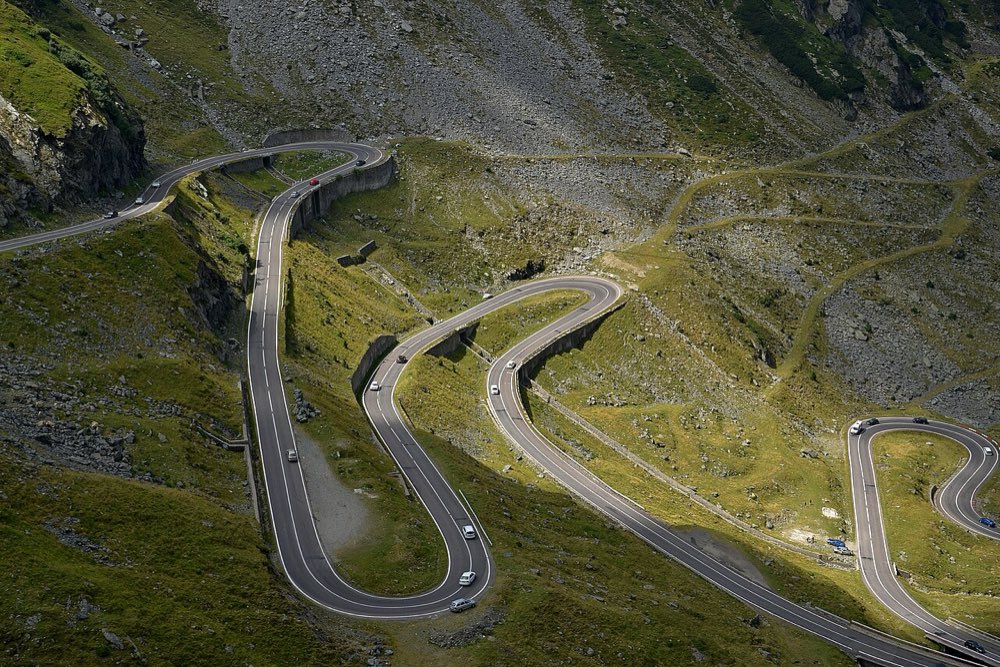
For many people, the Transfagarasan is the most beautiful road in Romania and one of the most spectacular in the world. The DN7C crosses the Fagaras Mountains, the highest in the country, and links Wallachia with Transylvania through a chain of hairpin bends, viaducts and tunnels that climbs above 2,000 metres. In 2009 the British show Top Gear called it "the best road in the world", and it has been a destination in its own right ever since.
Below you will find the history of the road, what you see along the way, when it is open and how to get there from Dracula Land, in Gherghita, Prahova County.
In short
- Route: from the Curtea de Arges area, in Arges County, to Cartisoara, in Sibiu County.
- The mountain section: about 90 km, with hairpin bends on both slopes.
- Highest point: around 2,040 m, at the tunnel under the ridge, next to Balea Lake.
- When it's open: usually from June or July to the end of October; in winter the high section is closed.
- From Gherghita: about 203 km to Curtea de Arges and 279 km to Balea Lake.
The history of the road
The Transfagarasan was built between 1970 and 1974 as a strategic military road. The idea came after the Warsaw Pact invasion of Czechoslovakia in 1968, when the country's leadership wanted a fast route over the mountains for the army in case of an attack. The work was done largely by soldiers, in very hard conditions and with huge amounts of dynamite, and several people lost their lives on the site.
The road was officially inaugurated on 20 September 1974. Besides the hairpin bends, it has dozens of viaducts and hundreds of small bridges, and under the ridge it passes through the Capra–Balea tunnel, about 884 metres long, the longest road tunnel in Romania and, at over 2,000 metres, also the highest.
What you see along the way, from the south
Coming from Gherghita, you join the Transfagarasan from the south, through Curtea de Arges. The main stops:
- Curtea de Arges Monastery, right at the start, with the legend of Master Manole.
- Poenari Fortress, perched on a rock above the valley; you climb about 1,480 steps. It is linked with the name of Vlad the Impaler; you will find its story in the history of Dracula.
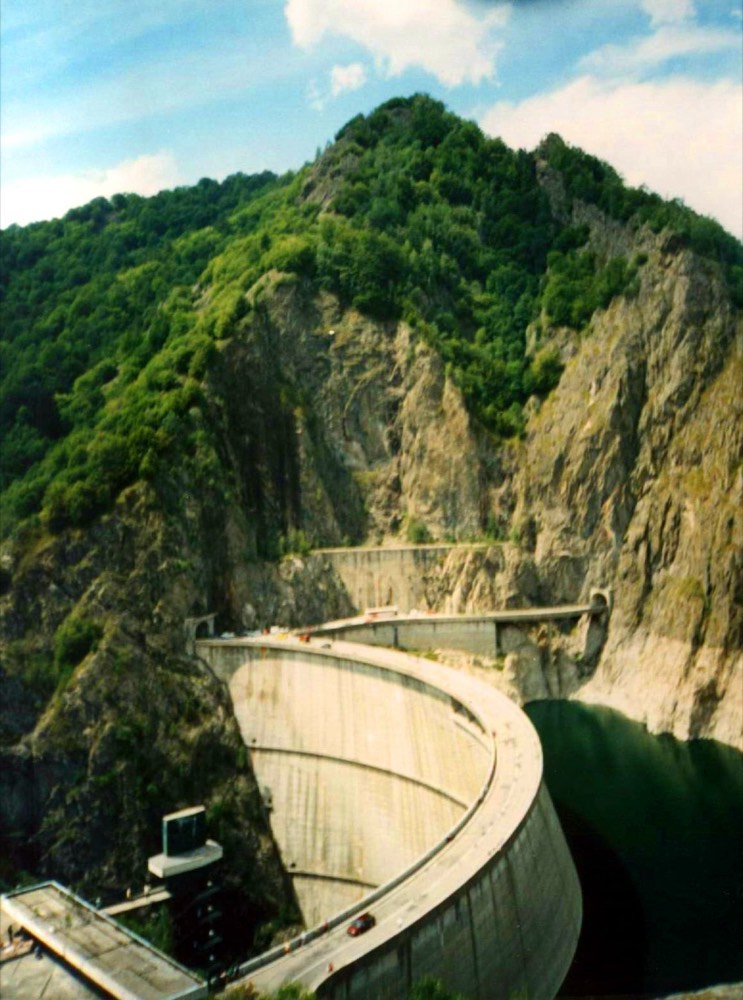
- The Vidraru Dam, a concrete wall more than 160 metres high, and Lake Vidraru, one of the largest reservoirs in the country.
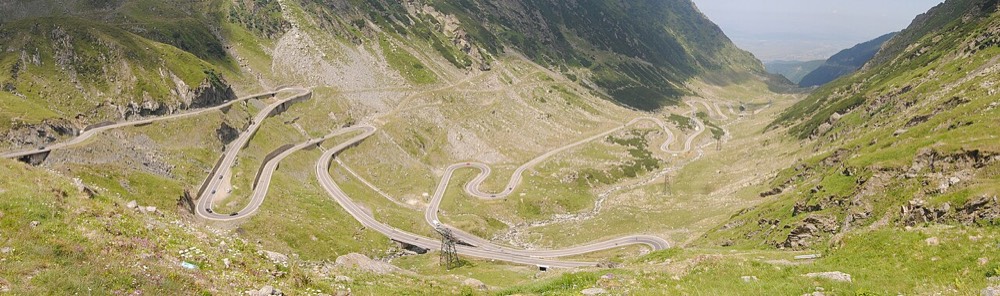
- The hairpin bends up the Capra valley, then the tunnel and the exit at Balea Lake, above 2,000 metres.
- On the northern slope: the spectacular descent to Balea Cascada, with the bends you see in every photograph.
Balea Lake, the highest point
At the end of the tunnel lies Balea Lake, a glacial lake above 2,000 metres, with chalets, terraces and trails towards the Fagaras ridge. It is the best-known stop on the Transfagarasan and is worth a whole day. We have written a separate guide: Balea Lake, the glacial lake in the Fagaras Mountains.
When the road is open
The high section of the road, between the Piscu Negru area on the southern slope and Balea Cascada on the northern one, is closed in winter because of snow and avalanche risk. It usually opens at the end of June or the beginning of July and closes at the end of October; in 2026, for example, it opened on 12 June. The exact date is announced each year by CNAIR, the national roads authority, depending on the weather.
Even when the road is closed, Balea Lake stays reachable by cable car from Balea Cascada, on the northern slope.
The bears of the Transfagarasan
On the southern slope, between Vidraru and Balea, bears often come down to the roadside, used to being fed by tourists. It looks like a sweet encounter, but it is dangerous for both people and animals:
- don't feed the bears: it is illegal and fined, and a bear used to human food often ends up being relocated or shot;
- don't get out of the car and don't go closer for photos;
- keep the windows up and drive on slowly.
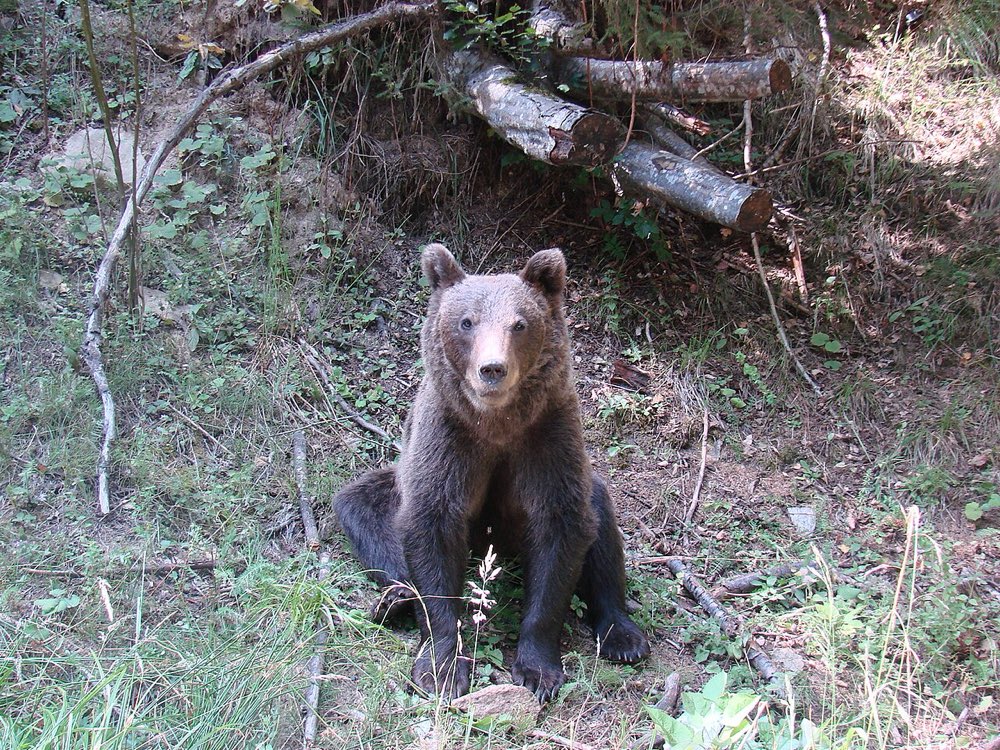
For more on bears, where they live and how to see them safely, read the bears of Romania.
Tips for the drive
- Leave early. On summer weekends, around midday, queues build up at Balea Lake and the Vidraru Dam.
- Fill up first. There are no petrol stations on the mountain section; fill up in Curtea de Arges or Cartisoara.
- Warm clothes. At Balea Lake it can be just a few degrees and windy even in August, and fog comes in fast.
- Drive carefully. The bends are tight, with motorcyclists and cyclists; use engine braking on the way down.
How to get there from Dracula Land
From Gherghita, head for Pitesti, either via Targoviste or on the A3 to Bucharest and then the A1, and from Pitesti continue on the DN7C towards Curtea de Arges. It is about 203 km to Curtea de Arges, roughly two and a half to three hours, and about 279 km to Balea Lake on the southern slope, roughly five hours with the usual stops.
You can do the Transfagarasan as a long day trip, or more relaxed, with a night's stay on the way. For the country's second spectacular mountain road, see also the Transalpina, the highest road in Romania.
Where to stay
For day trips to the Transfagarasan, the Prahova Valley or Bucharest, choose accommodation near Dracula Land, close to the A3 motorway, and set off early in the morning to catch the road while it's quiet.
Keep reading
More articles

Ialomita Cave (Ialomicioara): the legend, the monastery and how to get there
Ialomita Cave in the Bucegi, with the monastery at its entrance: a short history, local legends, what you see inside and how to get there from Dracula Land, about 127 km away.

Omu Peak, the roof of the Bucegi: trails and tips from Dracula Land
Omu Peak, the highest point of the Bucegi: a short history of the hut on the ridge, the routes up, safety tips and how to get there from Gherghita.